






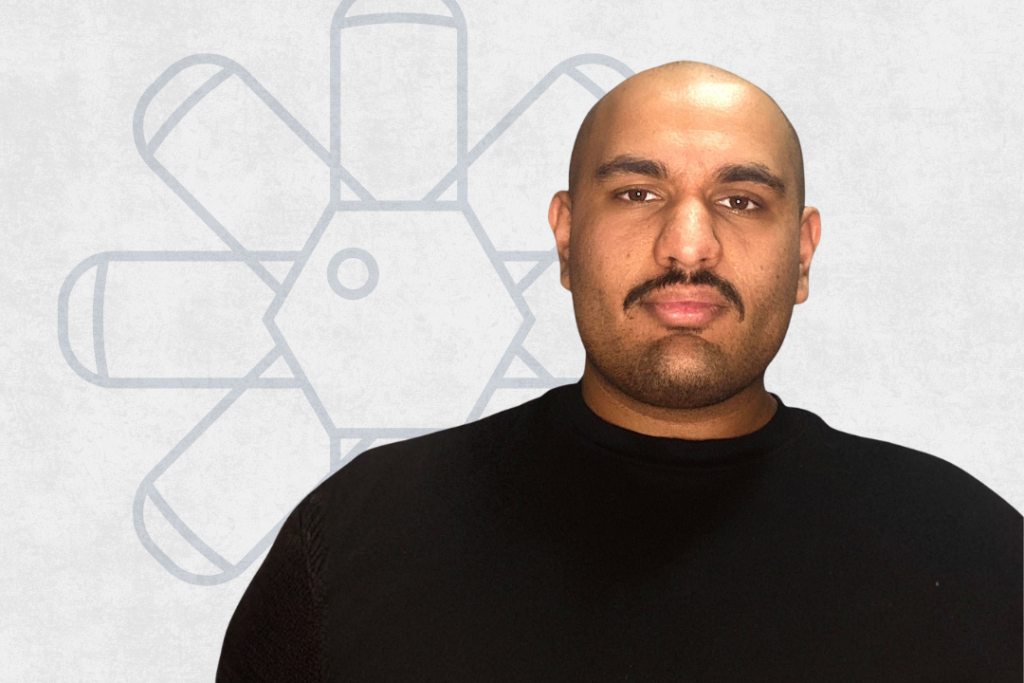
Arjun Nagarajan is an alumnus of the Catalyst’s CLIC program and a Catalyst Community Ambassador.
Before cybersecurity, Arjun spent his days on the phone offering tech support at Rogers Communications to people who didn’t know they were vulnerable.
They reused passwords. They shared credit card numbers without hesitation. Many had never heard of multi-factor authentication.
It stayed with him.
That discomfort followed him off the phone, making the next step feel inevitable.
Through the Catalyst, Arjun moved out of tech support and into cybersecurity, working toward the problems he couldn’t stop thinking about.
Recently, Arjun has realized his goal is to move into a specialized role in digital forensics and incident response. In March, he was promoted to cyber security advisor in the Rogers’ DFIR team. His drive and know-how for navigating his career were shaped by the career coaches he worked with in the CLIC program.
Early on, the job search felt directionless.
“You’re throwing spaghetti against the wall,” he says. “I don’t think that problem is unique to cyber. But what makes this field different is that it’s not beginner-friendly.”
Even entry-level roles demand context.
To become a SOC analyst, you need to understand endpoints,” he explains. “And to understand endpoints, you need to know how they function within a network.
CLIC gave him two things: recognized certifications and a cohort that grew alongside him.
Some of those peers, CLIC graduates, are now colleagues. All three found their fit in cybersecurity at Rogers, following the Catalyst program.
In his current role at Rogers Communications, he still passes a few of them in the hallway, people who started from the same place and are now building careers in the same field.
The CLIC program’s career coaches helped translate that progress into opportunity.
Harry Foy brought deep hiring experience. Zeinab Kahera helped the cohort build a presence online. Ben Babins coached them on how to speak about their work with confidence. Read more about these career coaches here.
“They all bring something different,” Arjun says. “And that’s what helps when you get to that job interview.”
His role in tech support was under-stimulating, but the problems he encountered made him think.
Through working hands-on with customers and listening to their challenges, he found a gap. The majority were not well-versed in email security and privacy. He saw an opportunity to address their vulnerability with simple fixes. Password education, MFA (multi-factor authentication), and boundaries around sharing personal information were a starting place.
This got him thinking about his own family. The question was clear: how do I protect them against this?
Arjun is focused on finding ways to lower the barrier to entry. But he’s also very real about belonging to the world of cybersecurity. He says you’re constantly learning, and you have to be able to check your ego and be willing to learn.
But stepping into the field still requires a leap.
“Nothing’s going to happen for you unless you take that first step,” he says. “You might get 10 nos, but there’s always going to be that 11th person that says yes.”
Arjun advises not to focus on the people who don’t get back to you, but to count your blessings and have a game plan for the person who does get back to you.
A few steps away from his start with CLIC, Arjun is ready to make way for other cyber talent and broaden access to the field. He continues to identify user-related problems and look for solutions. To him, it’s non-negotiable in the field.
For Arjun, it’s about making sure people understand the risks and how to protect themselves.
“Education and awareness are going to be our biggest allies,” he says.
Bio:
Arjun is dedicated to protecting organizations and individuals in today’s evolving digital landscape. With a solid foundation in cryptography, network traffic analysis, and endpoint security, he has demonstrated a fast-tracked growth in the field, earning two prestigious GIAC certifications within six months. His unique achievement of joining the GIAC Advisory Board — a distinction reserved for professionals scoring 90%+ on certification exams — reflects his commitment to excellence.
Through advanced training, such as the Rogers Cybersecure Catalyst (CLIC) program and hands-on experience in incident response simulations, he has honed skills in both Red Team offensive strategies and Blue Team defensive tactics. In these exercises, he has navigated real-world scenarios like ransomware injections, network compromises, and exploit mitigation.
My passion for cybersecurity isn’t just technical; it’s deeply personal. Growing up, he saw how vulnerable family members were to social engineering, device theft, and unsecured data. This inspired his mission to safeguard others from similar threats. In addition to his technical aptitude, he prides himself on his critical thinking, problem-solving abilities, and calm leadership under pressure.