




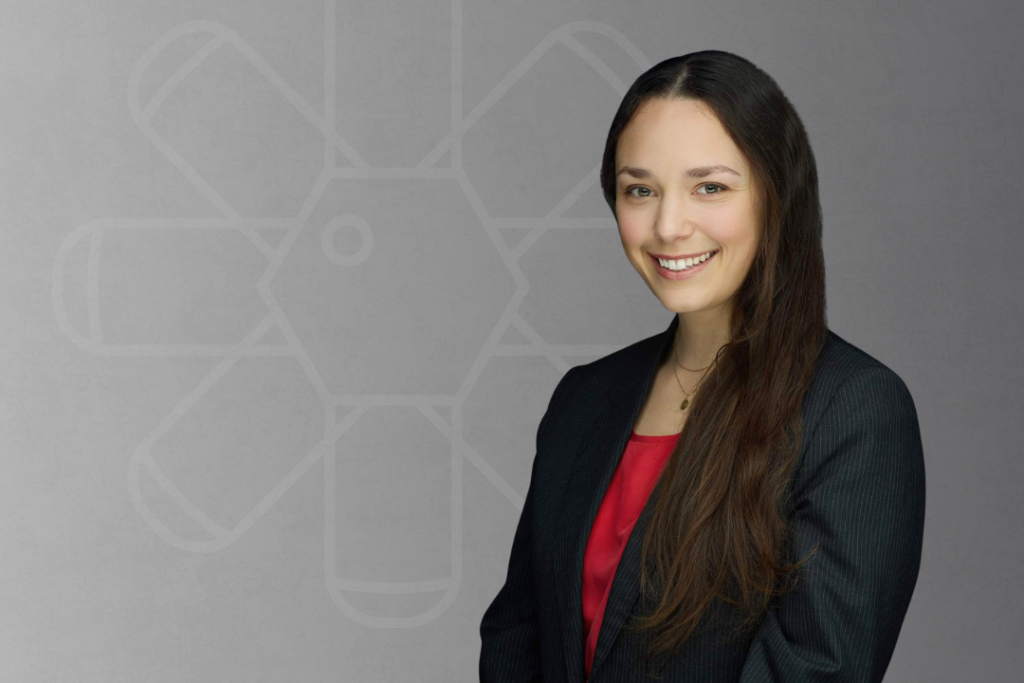
As the AI Practice Lead and Senior Trainer (Senior AI Advisor) at the Catalyst, Katrina helps organizations harness the power of artificial intelligence through custom strategic training solutions. She designs and delivers AI courses and corporate training programs ranging from beginner to advanced levels, covering both practical front-end applications and technical foundations of AI and machine learning. She is passionate about mathematics and machine learning, with experience running end-to-end ML projects and working with multilingual LLMs and generative AI.
At the end of any given weekend, Katrina Lawrence has covered a lot of ground. She’s worked out in the garden, planting enough veggies to feed her family from May through October. She’s worked on paintings that are studio-ready and mapped out her second novel. She’s played the cello, added more Gaelic to her language repertoire of English, French, and German, and spent time with friends. On top of that, she’s made room for a hike or a cross-country ski and hit the gym. She’s graded graduate student papers for her courses at Eastern University, worked on a research paper for Cohere Labs, and recorded a video or two for her math YouTube channel. And somehow, still, she’s fit in a black belt in karate. She’s not tired, and she’s certainly not boastful. She’s centered, kind, attentive, and fully present in whatever she’s doing.
Of all her passions, however, AI and its relationship to mathematics and the sciences stand out.
Katrina’s undergrad was in applied mathematics and business. What she loves most about applied math is that you can find applications everywhere. “It was very exploratory,” she says. “We had applied math for biology classes, applied math for physics, and applied math for finance. And that’s what I really liked about it: the mathematical foundations never change.” Her professors told her it’s much easier to be a mathematician learning biology than a biologist trying to learn advanced mathematics on the side.
It was her final year of undergrad during the COVID-19 pandemic, and she ended up taking some graduate-level courses, as other courses had been canceled. It opened up a new possibility, allowing her to write a second undergraduate thesis. It was her first foray into AI and machine learning. “We were modeling COVID,” she said, “using foundational machine learning algorithms to look at the number of cases over time.” Once they established the mathematical equations, they could model different behavioural and epidemiological parameters.
“Given that this many people were wearing masks, this many people were isolating, and this many people were vaccinated, what was the predictive number of cases?” According to Katrina, that’s a very classic machine learning problem.
Her second thesis was on the Applications of Random Matrix Theory in Machine Learning and Brain Mapping. Katrina had a revelation: machine learning was built upon math. “It opened my eyes to the fact that foundational calculus, algebra, probability, and statistics are the actual foundation of AI and machine learning.”
For Katrina, this was the moment the connection became clear: mathematics wasn’t just a tool for solving scientific problems — it was the language underlying modern AI itself.
At the time, she was caught between two fields. Her interest in mathematical applications to medicine was directly connected to what was happening at the time: COVID-19. But simultaneously, ChatGPT had released its first model. “There was a lot of chatter,” she said. “I thought this could be a really interesting field for the future.”
Math set her apart in the field. Her mathematical background helped her understand not just how to train models but also why certain approaches worked better than others. It helped her calibrate parameters, evaluate functions, and train models more effectively.
I truly believe that because AI is changing so fast and there’s high anxiety in the field where everyone feels that every day they need to read a new paper to stay up-to-date, math is relaxing. It doesn’t change every single day. The foundations are pretty set.
According to Katrina, the core math isn’t changing; it’s how you apply it to different cases. While it’s easy to get caught up in the pace of the field, mathematics allows her to step back.
As for her second thesis, Katrina explains that brain mapping involves using an fMRI (functional MRI) to scan the brain. The brain is divided into distinct regions, each called a functional area. At its core, brain mapping is about understanding connectivity between functional regions of the brain.
An example: they’ll give a person a scientific paper to read out loud while they’re doing a brain scan. Researchers then analyze which regions of the brain activate simultaneously in response to stimuli.
So, for instance, they did many different studies on a person reading English as a second language or reading something in history or math and science. The point was to give them different tasks that would light up different areas of the brain. Brain mapping examines correlations in signal intensity across brain regions under different stimuli.
So what was she doing on the mathematical side?
Within Random Matrix Theory, there is an important result called the Marchenko–Pastur Law. In simple terms, it shows that when you analyze large amounts of random data, the patterns created by noise tend to follow a very predictable mathematical distribution, regardless of the specific type of noise involved.
We can use this idea to help distinguish meaningful brain activity from random fluctuations in the data. To do this, we build what’s called a Wishart matrix using correlation data, which essentially gives us a mathematical estimate of the “noise floor,” which is the level of connectivity we would expect to see purely by chance.
As the amount of data increases, the patterns created by random noise become more predictable and begin to follow a known mathematical pattern called the Marchenko–Pastur distribution. The “eigenvalues” in this context are essentially measurements of how strong or important certain connection patterns are within the brain data. When the brain data produces values that fall outside of what we would normally expect from random noise, it suggests those patterns are not random at all. Instead, they likely reflect real, functional networks in the brain.
In other words, this approach provides a mathematically grounded way to separate real biological structure from noise created by limited or imperfect data collection. This was Katrina’s start in applying mathematics to real-world problems.
Katrina divided the brain into three-dimensional pixels, called “voxels,” and examined the signal intensity within each voxel under different brain stimuli. If there were two highly stimulated voxels in different functional regions of the brain, she would use RMT to test if it was abnormal, specifically, whether it followed the theoretical distribution.
A disruption in connectivity could indicate a tumor, stroke, learning disability, or other neurological condition. The point was to highlight potential medical issues using math.
By the time Katrina arrived at Cohere, an organization that builds foundational models and AI solutions, she was studying LLMs (large language models). “I think it’s funny how a lot of research questions come about in the first place,” she says. “You’re usually in some small meeting and throwing around ideas until you think, ‘wow, this could actually go somewhere.’”
The same mathematical thinking that helped her model disease spread and analyze brain connectivity now provided a framework for understanding how large language models learn, organize information, and generate human-like language.
She was working with two people from around the world. Katrina also has family in Austria, so there were many conversations happening abroad in different languages. They began discussing how modern translation tools often failed to preserve tone, nuance, and style across languages. The subtlety was lost.
One of the researchers said he was talking to his fiancée in Mexico over FaceTime. She was in a beautiful dress, and he was trying to say, ‘You look stunning.’ But the translation that came out was, ‘You look startling.’ That was the spark for the conversation.
They decided to create a style profile that was topic- and language-agnostic, enabling stylistically consistent multilingual translations. It wouldn’t matter what you were talking about; the numbers would represent your style of speech. Their goal was to make the model both scalable and realistic. Instead of 50,000 lines of speech, they reduced it to 100 lines and then artificially increased the data set size. They added thousands of lines from the existing Cohere Labs dataset.
Instead of 100 lines, you’d have 50,000 lines all randomly placed, and then they said, ‘cluster.’ They did it unsupervised, meaning they didn’t tell it how to cluster. The default was to cluster by topic, which was exactly what they wanted. For example, they would segment by food, sports, travel, and the weather.
They then compared the original sentence to the generated dataset. They treated sentences mathematically as vectors — lines moving in different directions through multidimensional space. If the angle between two lines is small, they’re pointing in the same direction, meaning they’re stylistically similar. So, they looked at the angle between vectors to determine which of the generated datasets most closely matched the style of the original speaker in order to build out their training datasets. Their thesis was that two people can talk about the same topic in different ways.
Ultimately, they engaged several additional mathematical processes and separated style from content. The concept could also apply to organizations attempting to unify diverse voices into a cohesive brand identity. It was another example of a theme that had followed Katrina throughout her career: using mathematical principles to solve increasingly human and complex problems.
As her work evolved from mathematical research into applied AI, Katrina became equally passionate about helping others understand the technology, not just building it. She invited her friends to an event where she was discussing research findings, and they anticipated that they wouldn’t be able to understand her talk. But they were pleasantly surprised that they could easily follow along. Katrina believes that accessibility is essential to meaningful science.
I’ve always been so intrigued by math, science, astronomy, and the world around us.
That broad interest brought Katrina to AI. “I think the biggest thing everyone needs to be aware of is that AI is evolving quickly. It’s reshaping how people work, communicate, and access information. Everyone’s using it, but the danger is they may not be using it correctly.” It’s something leaders can’t turn a blind eye to. “You want to be proactive instead of reactive,” says Katrina. “And that’s the biggest reason why the Secure AI course is going to be so important, because it will teach leadership how to be proactive.
According to Katrina, the Catalyst’s new course offering, Secure AI, will show them what AI is, the risks, and the available mitigation plans. That combination of deep technical expertise and a commitment to accessibility is what she brings to the Secure AI course, where the goal is not simply to explain AI, but to help leaders understand it well enough to make informed decisions about its use.
Secure AI is an interactive roadmap. Participants define a practical use case relevant to their organization while building a roadmap for responsible AI adoption. The goal is for them to bring it into their company so they can create their own governance. For Katrina, it’s another opportunity to do what she has always done best: translate complex technical concepts into practical tools that help people make better decisions.